Prior to the days of Email - people corresponded by snail mail. While digging for information I also came across this New York Times article dated August 12, 1886,"Dividing his Fortune" which actually describes part of Samuel Tilden's Will and how he left his money to build the New York Public Library. One of the things I admired most about Samuel Tilden was how he took care of the women in his family. He left them well established, as he did while alive...Here is also a link to Tilden family Genealogy.
What many do not know is Tilden't will was challenged by his Nephews in court and the New York Public Library almost didn't come to be. It was Samuel Tilden's best friend and confidant, John Bigelow who followed through to make sure his best friend's money was used to build the library.
Today, I wonder if people would still go out on a limb for a friend like Bigelow did for Tilden? Tilden never married so he had no direct heirs and it was John Bigelow he depended on to follow through for him, but did leave a "just in case" clause for Bigelow and other of his Estate Executives to use if the library was a no go. In later letters and as the letters unfold and are posted to my BLOG you will learn how Bigelow and Tilden became such close friends. They were, in my opinion, the "Odd Couple" with Bigelow being a devout Republican and Tilden a Democrat.
...Enjoy the history...Nikki Oldaker
The letters below are exchanges Pre Civil War between the Post Master General in DC and to Samuel Tilden's father, Elam Tilden who ran the Post office in New Lebanon NY.JOHN M. NILES - Postmaster General
TO ELAM TILDEN
"Washington, December 12, 1840.
"My Dear Sir,
I have your letter of the 7th inst., and thank you for the copy of the excellent speech of your son, which for the facts it contains, and sound, practical views, is worth more than all the speeches Daniel Webster has delivered on the currency question. The principal article in the Globe on prices and the wages of labor was from my pen, and I am pleased to learn that it met your approbation.
"That measures will be adopted before Congress closes to reorganize the Democratic party and settle on the course of action for the future is so manifestly proper, not to say indispensable, that I cannot doubt it will be attended to.
"Arrangements should be adopted for obtaining the facts from every country, town, and precinct in the Union, in relation to the foul frauds practised in the late elections. The' statements and certificates of these facts should be verified by oath when it could be done; and the whole ought to be published in a volume and put into the hands of every honest elector in the United States. This mass of information would be used by the Democratic papers as they might have occasion.
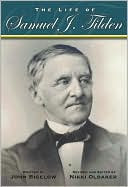
In his life he opened his mind on the subject of matrimony, a topic at that time of serious concern to her. See Bigelow's Life of Tilden, Vol. I., p. 80. Before the expiration of the year of which this letter bears date, she died. The brother when he wrote this letter was living with an aunt who kept a boarding-house at what was then the upper part of Broadway.
"Proprietor of the Hartford Times at the date and United States Senator from Connecticut.
"It is true, as you say, that the battle is not yet really begun; the true issues which divide the Democracy and the Federalists cannot be presented before the country except the latter are in power. They are then forced to come out with their measures and disclose their principles.
"There will be a glorious fight for the next four years, the result of which, I confidently believe, will be highly auspicious to the Democratic cause and the preservation of our popular institutions.
"I am, respectfully,
"Y'r ob't ser't,
"John M. Niles.
"E. Tilden, Esqr.,
"New Lebanon,"New York."
President Harrison died just one month after his inauguration, a casualty from which the Whig party never fully recovered. To the Congress which convened in extra session May 31, 1841, President Tyler intimated his desire that the members of that body should request a plan for a national bank from Mr. Ewing, then Secretary of the Treasury. In pursuance of the resolutions for this purpose adopted by both Houses, Mr. Ewing sent in a bill for the incorporation of the " Fiscal Bank of the United States," the essential features of which were framed in accordance with the President's suggestions. The bill passed Congress August 6, with a clause concerning branch banks differing from Mr. E wing's, which was vetoed by the President. The letter from Mr. Tilden which follows was a criticism of this bill, and probably had something to do with its untimely fate.
It does not appear from the copy to whom this letter was addressed by Mr. Tilden, but it was probably to Senator Wright.
Congress subsequently passed another bill intended to meet the objections of President Tyler. He concluded he could not approve it without inconsistency, and therefore vetoed that bill also, by which act he alienated the United States Bank wing of the Whig party to such an extent as to make many friends among the party of the opposition. It is to that phase of that absorbing bank issue at Washington that Mr. Tilden refers in the succeeding letter to Mr. Nelson J. Waterbury, then a very earnest, active, and intelligent Democratic politician, a few years Mr. Tilden's junior.
TO MR. NELSON J. WATERBURY
"New Lebanon, September 11, 1841."My Dear Waterbury,
On a flying visit of a few hours, which I made to the city some two weeks ago, I received your letter, but I was so busy in running about the country that I did not get a chance to answer it.
"You judge rightly as to my sympathy with your sentiments and action in regard to the veto. Our line of duty is plain. While we render to Tyler liberal credit for every good act he does, and sustain every right measure which he proposes, and defend him against the unjust and unconstitutional attacks of the Whigs, we cannot give his administration an unqualified support, or commit ourselves in favor of his re-election. So far, we agree with him only on the bank question—and there as to act of the veto, not as to its reasons, which are qualified and hesitating, and mingled with crudities and unsoundness; while as to the other questions—some of which are of great, if not equal, importance—we differ from him. If his course had been less objectionable we ought still to keep ourselves uncommitted as to the succession. We cannot enter into a bargain of office for measures. Whatever he does right, he must do spontaneously, and we will freely and heartily support, leaving the future to take care of itself.
"I never regarded Tyler as a man of very high capacity, and his public documents since he has been President have not increased my estimate of him. The last veto—which I have just read over—is better in matter and manner than the former, which was very objectionable in principle, but neither of them is creditable.
"I will confess that at first I was not without apprehensions that Tyler's course might be such as to conciliate a portion of our people, and weaken the efficiency of our action, while it would not be such as we could fully approve or safely support; and that he might construct a half-and half administration in which real and thorough democratic principles might suffer more than by open hostility. But my fears are diminished. Our people seem to be taking the right ground; and the enthusiasm at first excited will, I believe, settle at about the right point. A gentleman to whose opinion I very much defer thinks that Tyler is not a man to accumulate any political strength around him; and can in no event be dangerous.
"I do not know whether the Whigs will attempt to put in execution any of the desperate means which have been shadowed forth—such as a formal demand by the members of Congress for Tyler's resignation—a rejection of his nominations of official advisers in case the present cabinet shall retire — a systematic clamor to intimidate him to a surrender of his constitutional authorities. If they do, we must stand by him and his official rights to the uttermost.
"I intend to return to the city in about "three weeks. Meanwhile I shall be particularly glad to hear from you.
"I thank you for the paper you were so kind as to send me.
"Sincerely y'rs,
"S. J. Tilden."
Thursday, June 04, 2009


Tuesday, June 02, 2009
1835 Great Fire in New York City that Burnt Wall St. to Ashes...Samuel Tilden writes a Letter to his Father Describing the Aftermath

Today I will start from the beginning of Samuel Tilden's life long career so you can get a sense of the great political mind Tilden had. This letter is one if his first...In Letters and Literary Memos...There are two volumes of this book and the pages are filled with history as it happened and how it was dealt with. I wish these pages were required reading for each and every Congressional Representative today. The factual information and exchanged in these letters would offer our Representatives, Judicial, President and U.S. Citizens that care about our country the true history of America. The history recorded in these two volumes is precious and rich with the growth and pitfalls previously experienced. I think history can teach us and be our best guide to prevent us from repeating the same mistakes. I agree. Take note of the dates...Tilden's letter is dated in 1833 - yet the Great Fire of New York is dated 1835.
December 17, 1833...Tilden writes this letter to his father Elam about the great fire in New York City...
The most disastrous fire with which the city of New York has ever yet been visited is referred to in the following letter. It reduced to ashes pretty much every structure within the area bounded by Wall and Broad streets and the East River, a tract which then embraced nearly,
 if not quite all the important commission houses in the city; crippled all our insurance companies, and gave to the territory it covered a blow from which, after a lapse of nearly three- quarters of a century, it has but partially recovered. Like the great fire of London in the seventeenth century, it is still referred to as the Great Fire of 1835.
S. J. TILDEN TO ELAM TILDEN
" New York, December 17, 1833. Friday, 2.30 P.It.
"Mv Dear Father,—The last has been the most calamitous night New York ever saw. The very centre of the commercial part of the city — from Wall Street across William and nearly to Broad, and to Coenties Slip,—all is a mass of smouldering ruins. A concurrence of unfortunate circumstances rendered the fire thus disastrous. The engines had been much disordered, in consequence of the extensive fires on the previous night — the hose, many of them, frozen and unfit for use. The atmosphere was in a state peculiarly calculated to support and extend combustion, the wind blew with great violence, and the weather was so intensely cold as to clog and almost close up with ice the hose. The flames raged through the whole night with uncontrolled violence, impressing every beholder with the utter impotency of human effort to contend with the devouring element. The spectacle was grand and awful beyond conception. I shall not attempt to describe it. All the fires that ever occurred here before were perfectly insignificant in comparison.
" The question is now, not who is injured, but who has escaped? Almost all I know are involved in the common catastrophe. At No. 12, Mr. Hichcock burnt out; Mr. Birch, not even his books and papers saved. Mr. Brown burnt out, and his goods consumed in the street or in the stores to which they were removed. Mr. Starkweather not yet injured, but in imminent danger. Mr. Williams' employees, everything destroyed; and also Mr. Conckling's, I believe. At 14, Mr. Stewart's employees. At 20, Mr. Bronson among the lost; Mr. Soullard, same; Mr. Davis and escaped. Halsted and Baines, $40,000 lost;
20 to 30,000 saved. Hunt and Andrews, Conckling & , &c., &c.
" So vast is the destruction that insurance affords but a very insufficient security. The whole insurance capital of the city will scarce exceed one-half the amount of property consumed in one night! Estimates are very vague and uncertain—the loss, however, can hardly be less than twenty millions of dollars.
" There is not time to write a word more to-day.
" Affectionately yours,
" S. J. Tilden.
Monday, June 01, 2009
Tilden's Short Civil War Speech Aimed At Southern Democrats - He Supported Lincoln to Preserve the Union and U.S. Constitution
I wanted to start this series of BLOGS off with a short one paragraph speech Samuel was asked to write at the start of the Civil War. The exchange is between him and John VanBuren - President Martin VanBuren's son's remarks will come as a surprise to many as it did to me when I read it. To clarify, at the start of the Civil War a large majority of Northern Democrats did not support slave freedoms as much as they profess to today and they despised President Lincoln.
This, the first of many letters to come were exchanged during the Civil War reveals Tilden's opinion which many were not sure if he was right or he was wrong. Many trusted Tilden's judgment because he was sensible, smart and always gave great advice. Tilden stood his ground and he supported Lincoln's decision to fight to preserve the U.S. Constitution and the Union. He challenged both the Northern and Southern Democrats about their loyalties to America as you will read in his own words below. After much research about this man - I could only imagine what a tough decision it had to be for him to have taken this stance to save the our young growing nation and the freedoms the Founding Fathers gave us.
October 1862
MEMORANDUM LEFT BY MR. TILDEN
Mr. John Van Buren, who had become an earnest supporter of the war, just before he made a speech at a great Democratic meeting in the city of New York, in October, 1862, called upon Mr. Tilden.
" We must be for the war," said Mr. Van Buren.
" Certainly," replied Mr. Tilden.
Mr. Tilden was requested to reduce to writing what he suggested should be said. The next morning, on his way down-town, he left with Mr. Seymour a sketch of a peroration for the speech to be made that evening.
It was in the following words:
" And now, if my voice could reach the Southern people, through the journals of our metropolis, I would say to them that in no event can the triumph of the conservative sentiment of New York in the election mean consent to disunion, either now or hereafter. Its true import is restoration, North and South, of that Constitution which had secured every right, and under whose shelter all had been happy and prosperous until you madly fled from its protection. It was your act which began this calamitous civil war. It was your act which disabled us, as we are now disabled, of shaping the policy or limiting the objects of that war. Loyally as we maintained your rights, will we maintain the right of the government. We will not strike down its arm as long as yours is lifted against it. That noblest and greatest work of our wise ancestors is not destined to perish. We intend to rear once more upon the old and firm foundations its shattered columns, and to carry them higher towards the eternal skies. If the old flag waves in the nerveless grasp of a fanatic but feeble faction to whom you and not we abandoned it, we, whose courage you have tried when we stood unmoved between fanaticism and folly from the North and South alike, will once more bear it onward and aloft until it is again planted upon the towers of the Constitution, invincible by domestic as by foreign enemies. Within the Union we will give you the Constitution you profess to revere, renewed with fresh guarantees of equal rights and equal safety. We will give you everything that local self-government demands; everything that a common ancestry of glory —everything that national fraternity or Christian fellowship requires; but to dissolve the federal bond between these States, to dismember our country, whoever else consents, we will not. No; never, never, never 1"
Sunday, May 31, 2009
Samuel Tilden - Defining His Journey and Mine as I Produce his Documentary

Starting today - May 31st - my BLOG will be focused on the Samuel Tilden documentary I am producing. I've already published 2 books - and working on the third.
The Documentary will detail this great man's life and all that he accomplished. And oh what a life it was...
My goal is to bring forward his career in his own voice...You will be reading letters and speeches written by Tilden and other high ranking politicians of the day who continually sought his advice. In addition I will be posting my progress with the making of the documentary. Comments from readers will be welcome...and moderated... My goal here is to share the information and to get Mr. Tilden and the other honest political men that helped him their time in the spotlight.
John Bigelow, who was a Republican became best friends with Tilden and remained so for years even after Samuel's death. The duo trusted each other completely which was rare in the political arena.
 They worked diligently in a bi-partisan fashion to expose the wrongs-doings and to bring honesty into the fight. It is because of Bigelow's loyalty as a friend to Tilden the very reason why Tilden's vision of a free library in New York City saw the light of day. It took nearly 20 years for him to complete the mission and he died shortly after the grand opening.
Other history writers - some very famous have written about Tilden...I have read many of their books...and disappointed by the information that focused on everything but what Tilden was saying and doing. It has been a long time coming for these good men and each one of them deserves to be heard. Political Corruption will be brought to the forefront and you will read words straight from the horses mouth about how the media played their role with the corrupter. Enough said, "Time for the truth to be revealed."
----------------------------------------------------------------------------------
Tilden during his time was known as the Great Reformer...and he earned many political enemies because he took a stance each and every time he exposed them and put them out of business. Tilden's weapon against them was "Truth" ...There is nothing more frightening to a corrupt politician than the truth...They have spent a life time hiding him and I will spend the next 6 months revealing it to my readers.
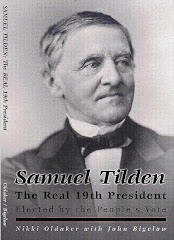
Samuel J. Tilden - the Real 19th President of the United States. He was Governor of New York and Founder of the New York Public Library. He was a Politician like none other - he truly and unselfishly loved America and the people. Our current Congress, Judiciary and President ignore his existence when in fact they would be better politicians if they followed his lead like so many have in the past when they sought his advise. Tilden's genius advice was sought by Presidents, Congressional leaders and the Judicial from both Democrats and Republicans. Presidents Martin Van Buren, Pierce, Lincoln and Cleveland to name a few.
This Blog and is being set up to take readers on the Tilden life journey with me as I research, write and produce his story. It is my hope that as I write about Mr. Tilden and struggle with the technical editing process we will all have a few laughs at my fallibles. I am planning to take this project global and tour with the my books and documentary. I am thankful for one thing that is for sure....History has a long shelf life and since I first discovered Mr. Tilden on a dusty old book shelf back in 1994 - we have gone through a few Presidents and Congressional leaders. I have compared their careers to Tilden's and found not a one of them came close to the same accomplishments as Mr. Tilden.
Nikki Oldaker, Author/Producer
www.SamuelTilden.com
Subscribe to:
Posts (Atom)